
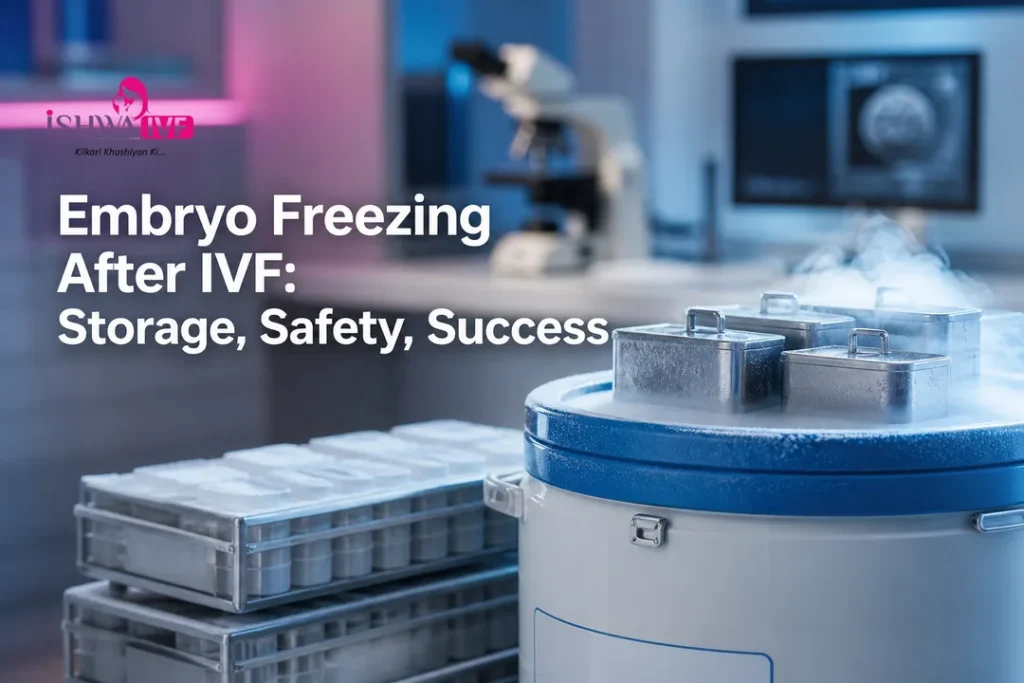
Embryo Freezing After IVF: Storage, Safety, Success is a common next step when IVF creates more good-quality embryos than you plan to transfer right away. In this guide, we explain embryo freezing after IVF in plain language, including how storage works, how safe vitrification is, and what influences success when you return for a frozen embryo transfer.
Why Patients Choose Embryo Freezing After IVF
First, freezing embryos gives you flexibility. You can plan a pregnancy when your body, family, and work feel ready. In addition, it helps many couples avoid repeating ovarian stimulation and egg pickup.
Second, freezing often supports safer IVF care. For example, clinics may recommend delaying transfer if hormone levels run high or if the uterine lining needs more time. As a result, a “freeze-all” plan can reduce medical risk in selected cases.
Common Reasons We Recommend Freezing
In our day-to-day work at Ishwa IVF, we often meet couples who feel relieved after freezing. They tell us the pressure drops once they know embryos are safely stored. Moreover, it helps them focus on recovery and next steps without rushing.
Typically, patients freeze embryos for reasons like these:
- You have extra embryos after a fresh transfer plan.
- Your doctor advises waiting because of OHSS risk or very high estrogen.
- You want time for uterine cavity treatment, like hysteroscopy.
- You plan genetic testing (PGT) and need time for results.
- You want family planning options for a second child later.
Freeze-All Cycles: When Waiting Can Be Smarter
Importantly, a freeze-all cycle is not “better” for everyone. However, it can be a thoughtful strategy when the body needs a calmer hormone environment. Your fertility specialist weighs your ovarian response, lining pattern, and overall reproductive health before suggesting it.
Embryo Freezing After IVF: Storage And Lab Safety
Next, it helps to understand what happens in the embryology lab. After fertilization through IVF or ICSI, the lab watches embryo development. Then the team freezes selected embryos, often at the blastocyst stage, using vitrification.
Vitrification is a rapid freezing method that reduces ice crystal formation. Therefore, it protects delicate cells better than older slow-freeze approaches. Skilled lab handling and consistent protocols matter as much as the method itself.
How Embryos Are Stored And Tracked
After freezing, embryos stay in cryogenic storage tanks filled with liquid nitrogen. These tanks maintain extremely low temperatures. Consequently, embryos remain in a stable state for long-term preservation.
Good IVF centers use strict identification and witnessing steps. For example, the lab labels each device with patient identifiers and logs every movement. In addition, many labs use double-witnessing to reduce mix-up risk.
For public health context on quality systems and patient safety, you can also review guidance from the World Health Organization on improving safety and quality in health services.
Is Embryo Freezing Safe For The Baby?
Many patients worry about long-term safety. Overall, large studies have followed children born after frozen embryo transfer. Notably, a landmark review reported that vitrification achieves high survival rates after warming, often over 90% in modern programs, depending on lab factors and embryo stage. You can read more in this peer-reviewed review on PubMed about embryo vitrification outcomes.
However, no fertility treatment can remove all risk. Outcomes depend on the underlying infertility diagnosis, maternal age, embryo quality, and pregnancy care. Therefore, your fertility doctor will discuss benefits and limitations for your case.
What Affects Success With Frozen Embryo Transfer
Success after freezing does not rely on one single factor. Instead, it comes from the combined effect of embryo health, uterine readiness, and careful timing. Moreover, the plan differs for each patient.
In general, clinics assess embryo grade, day of freezing, and survival after warming. Then they match transfer timing to ovulation or to a medicated schedule. As a result, the uterus and embryo meet at the right implantation window.
Key Factors That Influence Outcomes
First, age at the time of egg retrieval matters. Egg quality influences embryo genetics, even if you transfer later. Second, the embryo stage at freezing can matter because blastocysts allow clearer selection for development potential.
Third, uterine factors play a major role. For example, fibroids, polyps, thin endometrium, and chronic inflammation can reduce implantation chances. Therefore, many patients benefit from a cavity check, targeted treatment, or supportive gynecology care before transfer.
Finally, male infertility also affects embryo development. In those cases, ICSI may help fertilization. Still, sperm DNA quality can influence embryo progression. If needed, your fertility specialist may suggest advanced semen testing or treatment.
Planning Storage Duration, Costs, And Legal Consent
Before freezing, clinics take written consent for storage, usage decisions, and emergency contacts. Importantly, consent protects you and supports ethical handling of embryos. It also clarifies what happens if you relocate, separate, or want to donate embryos for research where allowed.
Storage duration rules and documentation can vary by region and clinic policy. Therefore, ask your IVF center for a clear written storage agreement and renewal process. In addition, keep your phone number and address updated with the clinic.
For patients who want to understand healthcare rights and digital health systems in India, you can explore resources from the National Health Authority, which outlines national health initiatives and patient-focused programs.
To make decisions easier, ask these practical questions during counseling:
- How many embryos do we have frozen, and on which day were they frozen?
- What method does the lab use for vitrification and warming?
- How does the lab prevent identification errors?
- What are the storage fees and renewal timelines?
- What happens to embryos if we do not renew consent?
Next Steps: From Frozen Embryo To Pregnancy Care
When you feel ready, the next step is planning a frozen embryo transfer (FET). First, your doctor decides between a natural-cycle transfer and a medicated cycle. Then the team schedules monitoring, lining checks, and progesterone support if needed.
After transfer, the two-week wait begins. Meanwhile, many patients do best with steady routines, good sleep, and stress reduction. Importantly, avoid self-prescribing supplements or stopping medicines without your fertility doctor’s advice.
Once pregnancy is confirmed, consistent follow-up matters. Early ultrasounds, thyroid checks, and metabolic screening help guide safe pregnancy care. If you have PCOS, diabetes, hypertension, or prior losses, you may also need high risk pregnancy monitoring.
In short, embryo freezing after IVF can preserve options and reduce repeat procedures, but results vary by diagnosis and biology. If you want a personalised plan, you can connect with Ishwa IVF or explore fertility preservation and IVF support through our fertility clinic team. We combine lab precision with compassionate guidance, so you always understand your choices and timelines.
Contact Us
Ishwa IVF Clinic
1st Floor, Ganga Heights, Tonk Road
(Near Gopalpura Flyover, Opposite Jaipur Hospital)
Kailash Puri Colony, Jaipur – 302018
📞 Phone: 9351333705